![BOSCORF [logo]](/themes/boscorf-NOC8X/logo.svg)
Accessing BOSCORF's Analytical Services
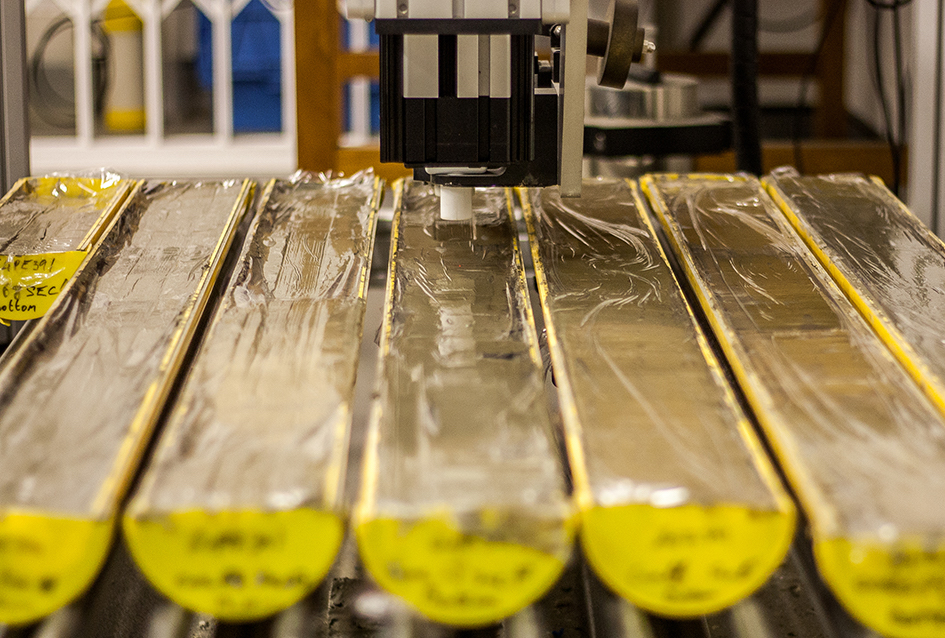
BOSCORF provides specialist sediment core analysis services for the scientific research community and can also support commercial activities. Applications to access BOSCORF services fall under four routes:
NERC Grant Supported Access
Early Career Researcher (ECR) Access
Costed Access
Commercial Access
We encourage all prospective users to discuss their requirements with BOSCORF staff at the earliest opportunity.
NERC Grant Supported Access
NERC Grant Supported Access is intended for projects where BOSCORF analytical work was included as a NERC facility and costed within a NERC research grant at the proposal stage. Under this route, analytical and staff costs are covered directly by the awarded grant, and BOSCORF undertakes the work as part of the project’s approved budget.
For guidance on incorporating facility use into NERC applications, see Using NERC facilities and resources – UKRI
Early Career Researcher (ECR) Access
ECR Access offers in-kind analytical support for early career researchers, with BOSCORF covering all analytical and staff costs directly through NERC National Capability funding. This route is designed to give PhD students and postdoctoral researchers access to BOSCORF’s services to generate high-quality pilot data and/or undertake small-scale research projects.
For full details, eligibility, and deadlines, see the BOSCORF ECR Access scheme page.
Costed Access
Costed Access provides paid analytical services for users wishing to cover the full cost of laboratory work using their own funds. This option is suitable for activities outside NERC grant-based or ECR routes.
Commercial Access
This option is intended for industry clients, commercial partners, and other non-academic users seeking high-quality sediment core analysis services.
For commercial enquiries and partnerships please contact nocbusiness@noc.ac.uk
How to Request Access
To request analysis time, please complete the appropriate form and send any required supporting material.
Please contact BOSCORF staff before submitting your form to confirm feasibility, timelines, and any preparatory requirements.
Supporting information
Please email your Analysis Request Sample List and any relevant supplementary information (e.g., sampling plan, method notes, figures, images, etc) to boscorf@noc.ac.uk .
Acknowledging BOSCORF
Please acknowledge BOSCORF in any research output produced, in whole or in part, using data or samples processed at the facility. BOSCORF compiles an Annual Report showcasing research enabled by the facility; to support accurate reporting and impact tracking, please notify us of any outputs, including journal articles, books, theses, datasets, conference abstracts, and presentations.
Suggested acknowledgement wording (adapt as appropriate): “We acknowledge the support of the British Ocean Sediment Core Research Facility (BOSCORF) for core processing and analytical services.”
If facility staff have made a significant intellectual, methodological, or analytical contribution, please consider co-authorship in research outputs.
Research collaboration with facility staff
BOSCORF maintains an active research collaboration culture. Users are encouraged to engage with our staff across:
Logistics and sample preparation
Instrument setup and analytical workflows
Data quality assurance and curation
Interpretation and integration with complementary datasets
Where appropriate, we welcome collaboration through to manuscript preparation and publication.
Contributor Role Taxonomy (CRediT)
To recognise contributions transparently, we encourage the use of the CRediT contributor roles (e.g., Conceptualization, Methodology, Data Curation, Formal Analysis, Software, Visualization, Writing – Review & Editing) when describing the roles of BOSCORF staff in research outputs. Learn more about CRediT on the initiative’s website and in relevant journal guidance.